Received an update just after writing the post “The Busy Machine”.
Native Instruments filed for insolvency. VST Buzz is shutting down. Eastwest is shaking hands with an AI company.
The sample library industry is collapsing?
No! It’s just becoming redundant.
These were the original prompt farmers who recorded session musicians playing loops, phrases, chord progressions. They packaged musical sentences, so producers drag, drop and pretend. Nobody called it cheating. It was just how music is produced in most cases.
For decades, this was the deal: we’ll do the hard part, you assemble. Pay us once, produce forever.
But now the machines don’t need the samples. Suno doesn’t browse libraries. The middleman desires a funk guitar riff and the riff itself has been eliminated.
The prompt farmers have been outfarmed.
There’s an irony here that’s almost too clean.
These companies made music production easier. They lowered the barrier. They said: you don’t need to be a guitarist to have guitar in your track. You don’t need an orchestra. You don’t need years of practice. Just browse, audition, drag, drop.
They were right. And they built the expectation that music could be assembled from parts. That the craft was in selection and arrangement, not origination.
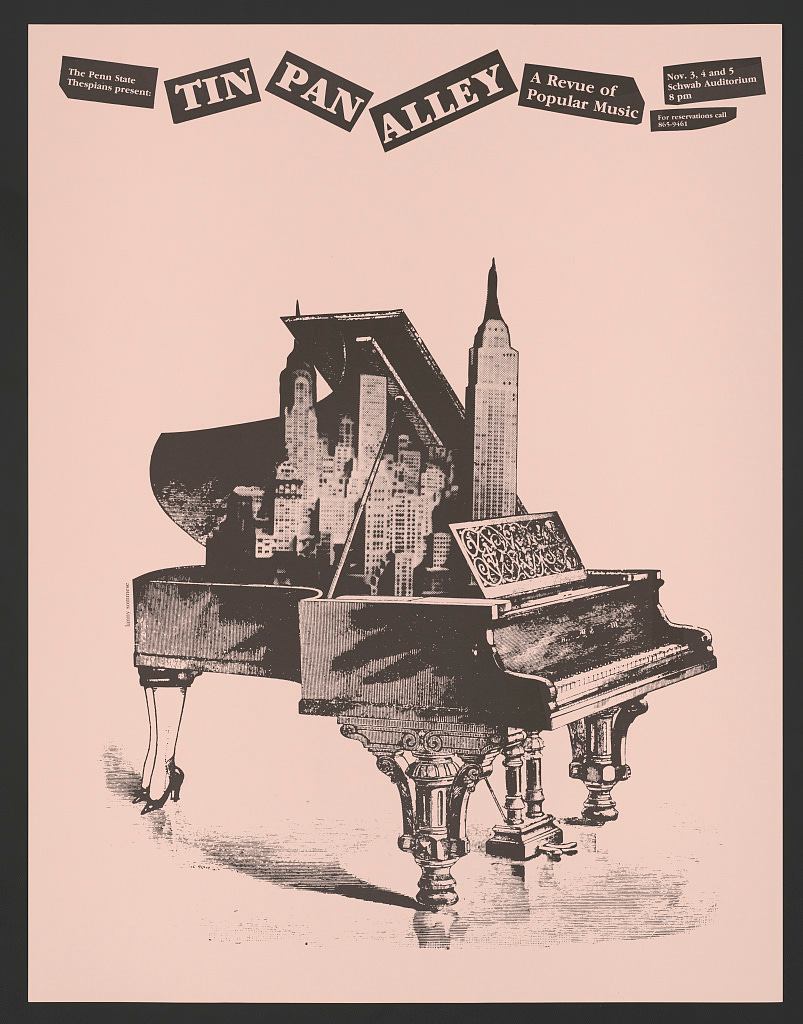
But they weren’t inventing a new shortcut; they were just digitizing a century-old factory floor. A hundred years ago, Tin Pan Alley perfected the “Standard.” They treated the song like an industrial blueprint, breaking it down into specialized cells of lyricists, melody-makers, and “pluggers.” They proved that the craft wasn’t in the mystery of origination, but in the efficiency of standardization. Modern software just turned those blueprints into digital assets. They built the expectation that music could be assembled from pre-optimized parts.
AI just took that logic to its conclusion.
If music is assembly, why not automate the assembly? If the value is in the final output, not the process, why pay for pre-made parts when the machine can make them fresh?
The sample library business was built on a philosophy that has been used against them.
Eastwest’s move is a survival choice. Either partner with AI or become irrelevant. They provide training data to ACE Studios—decades of orchestral recordings feeding the machine. In return, maybe they get AI intelligence in their sampler.
We have seen this branding play before, but with a physical soul. For years, companies released libraries like “Hans Zimmer Strings” or “Spitfire Abbey Road”. You bought the prestige of the player and the room. Now, an AI company may release the “Eastwest Strings Model.”
It won’t be a collection of files. It will be a neural network trained on their specific DNA. You won’t browse for a violin staccato; you will tell the model to be more Eastwest.
Maybe it works. Maybe their orchestral samples become the DNA of a new generation of AI composers. Maybe there’s a future where “Eastwest-trained AI” is a premium selling point. Or maybe they’re just selling the last of the grain before the farm gets bulldozed.
I don’t feel schadenfreude. I used these tools. Everyone did.
But I used them to replace the players and studio time when warranted. I am not a fan of the drag and drop thing, for it would make me sound like everyone else—which would be devastating for my position as a production music composer in a saturated industry.
Now I have moved to notations to preserve myself from the assimilation by the technology.
But I notice something: the composers I know who never relied heavily on libraries, the ones who wrote note by note, who orchestrated by hand, who treated samples as seasoning not structure—they’re less worried.
Not because they’re safe. Nobody is safe. But because their craft was never about assembly. The thing AI replaces most easily is the thing that was already closest to automation.
The prompt farmers are getting farmed.
The question for the rest of us: which part of our work is assembly? Which part is something else?
And do we know the difference?