

Dario Amodei, CEO of Anthropic, recently called AI’s impact on jobs “unusually painful.” I wanted to talk to my wife about it. About whether she feels the stakes. But she’s been busy with her dashboards and Gantt charts all day.
So, I asked myself if it is just me who thinks the stakes are real?
I unlearned to be “productive” long ago.
But the theater is packed.
People always love productivity hacks. The meeting that could have been an email. The email that could have been nothing. The Gantt chart that nobody reads. The status update for invisible audiences.
AI has not created this disease. It has just made it more acute.
AI-generated summaries of meeting, AI-assisted emails that say less in more words. Dashboards that track the tracking of trackable things. The productivity theater has gained a new special effects department.
We see it around. Writers have been the loudest complainants against AI. When it comes to AI, people talk about jobs and writing. These are the popular concerns. But musicians know something writers don’t.
The dominant complaint in writing is plagiarism, or it should be the one. AI models trained on copyrighted works. It swallows and spits what it learned without attribution. It steals style and craft.
These are real concerns, not the real stakes.
The concern isn’t about unauthorized text. The concern is deeper. Something hard to name. The fight on plagiarism grounds obscures the philosophical rupture.
This something I know personally: music has had prompt farmers for decades. Long before Suno wrote its first delta blues, producers assembling together phrase libraries, loop packs, sample collections: dragging and dropping prebuilt musical sentences into arrangements. Nobody called it theft. Nobody demanded attribution to the anonymous session musician who played that funk guitar loop in 1997.
Writers believe literature is special and the words are sacred; the novel is sacred.
No. Literature is as special as any creation. No more, no less.
The only question has ever been how much prompt farming? How much of the work is considered assembly versus creation. And the loudest complaints don’t come from the composers or writers who do the deep work as they know the deeper truth. I think that they’ve always known.
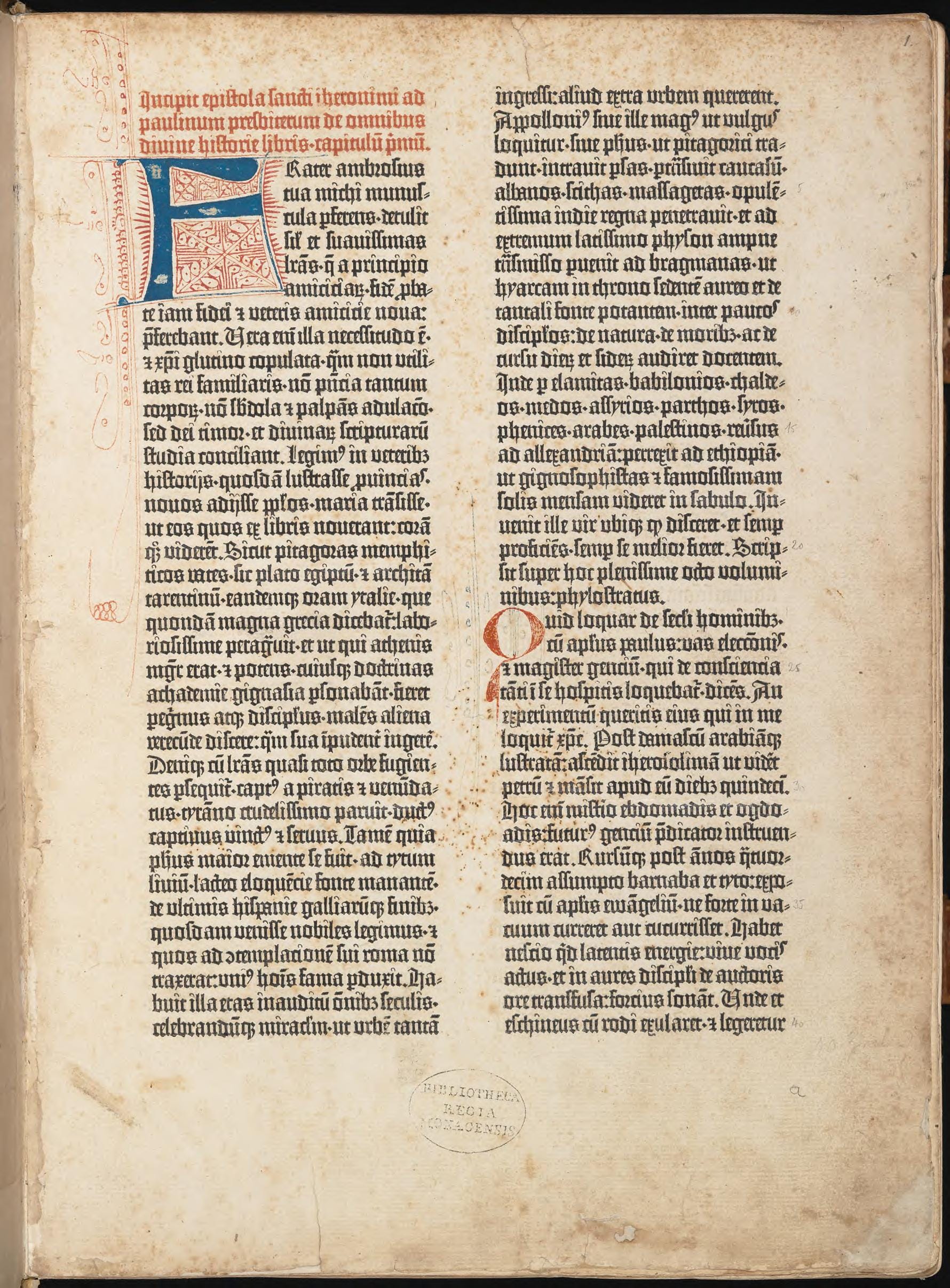
Gutenberg has just printed his bibles again. This time, they are not 180 copies. They are billions. They are digital. It looks colossal because we’re already inside the productivity theater. The new scenery dwarfs everything we have built so far.
The real question isn’t “who owns these words?”
The real questions are harder than that.
What happens when the effort and the outcome decouple entirely? We maintained a correlation between the effort and the outcome for centuries. A craft bore some relationship to the time and attention in the creation . AI breaks this. A person can produce a 5,000-word essay in thirty seconds. If you can’t tell by reading it, does the origin matter?
What would happen when everyone can produce anything? Scarcity shaped culture. The barriers to create created value beyond economics—the meaning. Difficulty was an integral part of significance.
What happens to the relationship between struggle and meaning? We read the creator’s attention in the creation. AI-generated content embodies only a request.
The writers are right to be worried. But they’re worried about the wrong thing.
Or they’re worried about something they can articulate, because the real worry resists articulation.
The plagiarism debate is a distraction. It lets us fight about law and attribution, ignores the philosophical abyss underneath.
Meanwhile, the theater continues.
AI hasn’t made us more “productive”. It has made us more prolific at performing productivity.
The gap between “busy” and “useful” was already wide. AI has made it a canyon.
We generate more. We are artificially productive for artificial reasons.
What does authenticity mean when everything can be assembled? I don’t have answers. But the questions feel urgent and under-explored. Maybe that’s the point. We’re too busy to ask the questions that really matter. Like we have always been. And I know this will pass too. Like how it has been, always.
Well said. I’m thinking about these questions, too. For all the writers complaining about AI, there are more using it to be “productive.” I especially see it on Substack lately. Long pieces packed with clever phrases and AI-typical rhetorical devices, often saying the same things over and over. I think many writers believe nothing is lost as long as the machine’s production stays true to their ideas. Maybe that would be true in isolation. But when the same writing style shows up in one post after another, it becomes annoying, at best. Also, when a writer hasn’t gone through the rigor of putting their ideas into polished words, refining those ideas in the process, I feel less inclined to do the work of reading and digesting. I say this as someone who’s worked a lot with AI as a writing tool. I probably wield it more skillfully than most. But I’ve let go the idea that it can write just like me, but faster. No matter how good the output is, something is missing. I can’t quite say what that is. Maybe the same ineffable something at the heart of human consciousness, something for which we also have no words.
"AI hasn’t made us more “productive”. It has made us more prolific at performing productivity.
The gap between “busy” and “useful” was already wide. AI has made it a canyon."
Very well put.