

The Monk’s Bell
Before the clock, time was something you felt. After the clock, time was something you were told.

Nobody told the monk it was time to pray.
He knew it. Something in his body, the angle of light through the window, the weight of silence after the last meal, the rhythm of a day lived inside the same walls for years, told him it was time. He rang the bell. Prayer happened just because a man who had given his life to stillness and felt the movement of hours.
The hours themselves were alive. They stretched in summer, compressed in winter. A daylight hour in June was not the same as in December. Time moved with the sun. The monk’s body knew that movement without calculation. Like the way an animal knows when to migrate or when to sleep.
This was intelligence. A biological reading of the world, refined across thousands of years of human adaptation. The body could feel the difference between early morning and late morning without consulting anything external. It knew when to eat, when to rest. It had its own clock, and that clock was tuned to light, temperature, hunger, fatigue, and the slow rotation of the planet.
Then someone built a better one.
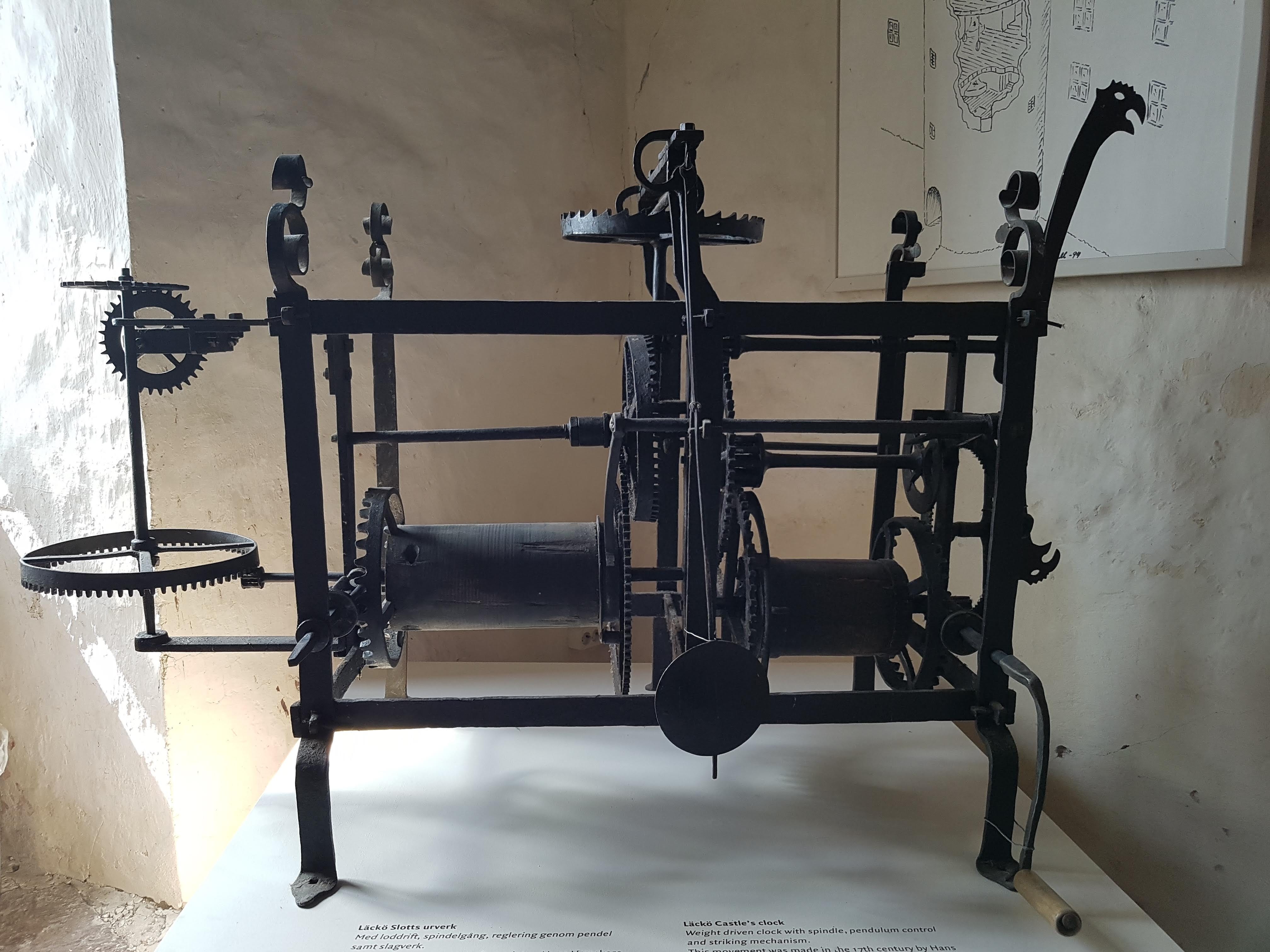
The mechanical clock arrived in European monasteries around the 13th century. The irony? The institution most devoted to the inner life built the machine that would destroy it.
The monks needed regularity. The canonical hours structured the day into intervals of prayers. Till then, that intervals had been approximate, responsive to the season and the judgment of the monk who rang the bell. The mechanical clock replaced that judgment with a mechanism. The bell still rang, but when the gear told it ring.
Now, the hours became reliable. Every monk in the monastery heard the same bell at the same moment. No more ambiguity about whether it was time. The machine removed the uncertainty.
The clock spread across towns. Church towers began displaying clock faces. The town square had a time for everyone to see it. Time, the internal approximation, became external precision. It became public and same for everyone.
And an hour in January became identical to an hour in July.
For the entire history of the human species before the mechanical clock, time was seasonal. Your body knew this. Longer darkness in winter meant longer sleep. Shorter days meant conservation — less activity, more rest, stored energy. Summer meant expansion — longer waking, more movement, the body opening outward with the light.
It was biological. Melatonin production shifts with the length of the night. Cortisol cycles change across seasons. Appetite, immune function, metabolism, mood; everything is tuned to the ratio of light to dark. Every system in the body responds to the season, for millennia, it was all about living — no other choice.
The clock now said that none of these matters. An hour is an hour. Winter or summer, just get up at the same time and work the same hours. Eat and sleep the same hours. The schedule doesn’t flex. The body must comply.
And when the body refuses, say you are sluggish in December, restless in June, exhausted when the schedule says you should be productive, we call it a disorder. Or you are lazy. We medicalize the body’s refusal to abandon its own intelligence.
The clock didn’t just measure time. It overrode the intelligence the human body took thousands of years to develop. Maybe the first violence on biology.
Before the clock, humans slept differently.
The evidence is remarkable. Historian Roger Ekirch uncovered over two thousand references to segmented sleep in pre-industrial sources, like diaries, medical texts, literature, prayer books, court records. The pattern was consistent: people slept for about four hours in a “first sleep,” woke after midnight for an hour or two, then took a “second sleep” until dawn.
This was not insomnia. This was how humans slept across continents, across centuries. Evidence of biphasic sleep has been found in Europe, the Middle East, Africa, South Asia, Southeast Asia, Latin America. In 1555, a French priest in Brazil reported that the Tupinamba Indians ate whenever they had an appetite, even at night after their first sleep, then returned to bed. It was the same pattern everywhere.
In the 1990s, a researcher named Thomas Wehr conducted an experiment that confirmed what the historical record suggested. He placed subjects in fourteen hours of darkness per day for a month. After an initial period of catching up on lost sleep, they began sleeping exactly as pre-industrial people had been described to do: four hours, then waking for two to three hours, then four hours again.
Take away the artificial light. Take away the clock. The body goes back.
The waking hour between the two sleeps was not wasted. People prayed, reflected, interpreted dreams. They visited neighbors, wrote letters, made love. Some scholars wrote their best work in this quiet interlude. It was a natural pause in the middle of the night, as ordinary and unremarkable as breathing.
The clock and artificial light, working together, compressed this into one block. Sleep was standardized like everything else. Eight hours, continuous, on schedule. And the people who still wake at 2 AM might be those whose bodies remember the old pattern, the one etched into them across millennia, are told they have a disorder. They are given medication to fix what was never broken.
Sometime, if not daily, you eat at 1 o’clock just because the clock says it is lunchtime.
Your child, before she learned the clock, ate when she was hungry. She slept when she was tired. She woke when she was rested. She had no schedule. Her body told her everything the clock would later override.
Somewhere between childhood and adulthood, the clock replaced the stomach.
No living creature does this except us. We are civilized.
The monk who rang the bell without a clock was a human being who felt the hour and acted on the feeling. He trusted something inside him that was older than language, religion, agriculture. It just told him when it was time.
The mechanical clock broke that by offering something better and making the old way unnecessary. It gave certainty. It made the time “democratic.”
But certainty always comes at the cost of some sort of human sense.
This is the same trade Socrates saw with writing. The tool doesn’t assist the faculty. It replaces the faculty. And once replaced, the faculty atrophies. The monk who relied on the clock could no longer feel the hour. The student who relied on the text could no longer hold the knowledge embodied. The sense was made unnecessary, and disappeared.
We are now several generations into this displacement, and we barely know what was lost
The same loss that Socrates mourned, that the Buddha navigated, that Shankara debated across a subcontinent.
The clock didn’t just change when we do things. It changed what we are. It made us creatures who distrust the body’s oldest intelligence in favor of a device that has been around for eight centuries.
The majority chose the device. The majority was right. The clock is more reliable, more precise, more useful than the monk’s felt hour. And something irreplaceable died in the trade.
Both sides are right. Every single time.
What we became when we stopped trusting the body?
Next in the series: The Ashamed Book: on the printing press and the death of intimate knowledge.
I read an article on Aeon Magazine about this just a couple of weeks ago (https://aeon.co/essays/why-broken-sleep-is-a-golden-time-for-creativity if you are curious). I had no idea this was the norm at all, let alone so recently.
I think my body wants to sleep this way. I simply can't sleep more than 5 hours or so at once. To compensate, I slip in a nap or two during the day. (Luckily, being self-employed, this isn't a problem!)
Over the last few years I've gotten a lot more, hmm, aware of, into, sympathetic to how modernity has cut us off from so much of the physical, natural, imprecise world. I feel that this is at or at least near the root of many of our current ills.
Have you read David Abram's "The Spell of the Sensuous"?