

The Ashamed Book
The scribe wrote a book for someone. The press wrote a book for anyone. The reader became nobody.

Before the press, a book knew who it belonged to.
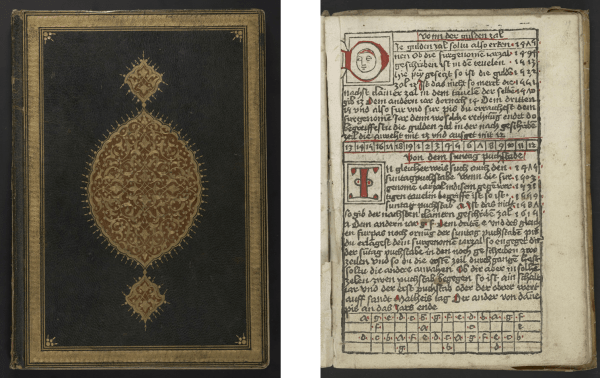
A man of means would commission a scribe, sometimes a monk, sometimes a professional clerk, to produce a text. The process took months, occasionally years. The patron chose the text, the script and the decoration. He might request a family crest on the opening page, a particular saint in the margins, wider spacing for his aging eyes. The scribe prepared the parchment, the animal skin soaked, scraped, stretched, dried. He cut the quill, mixed the ink, ruled the lines by hand, and began.
Every letter passed through a human body on its way to the page. The scribe’s hand trembled slightly differently on a cold morning. His flourishes grew bolder when the text moved him. His errors revealed his fatigue, his haste, his humanity. The finished book was unlike any other copy in existence. It was singular. It was made with hands.
And it was made for someone. The patron could hold it and know: this object exists because I asked for it. No one else has this exact book. It was born out of a relationship between the one who wanted the words and the one whose hand delivered them.
People put these books in their wills. They passed them to children like land or jewellery. It was not that words were rare. The same text might exist in a hundred other handwritten copies, but this particular rendering of those words was unique and irreplaceable. The book was not just what it said. It was what it was.
Writing had already killed something. Socrates saw it clearly. The living voice displaced by writing, the roaming of dialogue replaced by the stillness of the page. That displacement was real and complete in itself.
But within that loss, humans built something new. They couldn’t bring back the Socratic dialogue, so they made the page beautiful. They turned writing into craft. The illuminated manuscript. Gold leaf pressed into vellum, pigments mixed from minerals and plants, borders that took weeks to complete. It was not a failed attempt to replace the oral tradition, but a new form of devotion born inside the displacement. The scribe’s hand became the site where knowledge and making were still united. The book became an object worthy of reverence, because the writing was done with such care that it carried its own kind of life.
The press killed that.
Johannes Gutenberg refined movable type around 1450. Within fifty years, the number of books in Europe went from a few tens of thousands to somewhere between fifteen and twenty million copies. The price collapsed. A book that once cost as much as a house became affordable to merchants, students and tradesmen. The words that had been locked inside monasteries and noble libraries walked out into the world.
The gain was civilizational.
Standardized texts meant that a scientist in England could look at the same data as one in Poland. Identical copies meant errors could be caught and corrected across an entire edition. Title pages, pagination, indexes, tables of contents — the reader gained tools for navigating knowledge that manuscripts never offered. Martin Luther’s ideas spread across Europe in weeks because the press could produce them faster than any authority could suppress them. The Reformation, the Scientific Revolution, the Enlightenment, none of it was possible without the printed press.
The majority welcomed the press. Knowledge was no longer the monopoly of the few. That gain was enormous, and real, and permanent.
But here is what disappeared.
The printed book did not know who it belonged to.
It arrived in the reader’s hands identical to every other copy. Same type, same page, same binding. Nothing in it had been chosen for this particular reader. Nothing in it carried the mark of a human hand. The patron became a customer. The relationship between the one who made the book and the one who received it — gone.
Before printing, the reader was visible to the maker. The scribe knew the patron’s name, his preferences, his devotional habits, his family. The book carried that knowledge in its body. In the crest on the first page, the saints chosen for the margins, the width of the spacing. The reader was legible to the text.
The press made the reader illegible.
Some readers understood what had been lost. For nearly a century after the press arrived, wealthy patrons continued commissioning handwritten manuscripts. Because they felt the “stigma of print.” A printed book was public. Common. For anyone. A handwritten book was still exclusive, still personal, still made.
In the 16th century, it was considered vulgar for a gentleman or aristocrat to publish their poetry or literature for a commercial audience.
These aristocrats were mourning a relationship. And they were right to mourn. But the mourning changed nothing. The press was better. Faster, cheaper, more accurate, more democratic. The handwritten book retreated to the margins and eventually disappeared.
Each displacement in this series follows the same pattern. A human sense is replaced by a tool. The majority welcomes it because the sense was effort. The few mourn it because the effort was the point.
After writing displaced the voice, humans had built something inside that loss. The scribe’s hand, the illuminated page, the singular book made for a specific person. They were new. They were what humans created to make the displacement bearable. A craft born from the ruins of the oral tradition. A new relationship to replace the one that was lost.
The press destroyed that recovery. It didn’t just displace an original sense. It displaced what humans had built to cope with the previous displacement. The compensation itself was taken.
And this is the pattern that deepens with every essay. We lose something. We build something inside the loss. And then we lose that too.
We now live so deep inside this displacement that we have forgotten books were ever personal. We walk into bookshops and choose from thousands of identical copies. Before press, you didn’t choose a book. A book was made for you.
But the gain was real. Millions can read. Knowledge circulates freely. Science builds on itself. Democracy depends on the informed citizen, and the informed citizen depends on the affordable book.
But something irreplaceable died in the trade.
The book that once knew your name became the book that doesn’t know you exist. That is the shame. Not the book’s shame. It’s ours, for not noticing what we traded when we traded it. For not missing what we should have missed.
Next in the series: General Ludd’s Real Complaint — on industrial mechanisation and the death of the skilled hand.