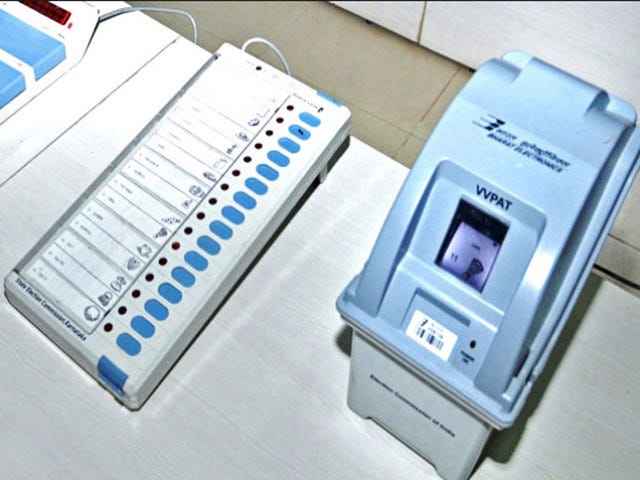
At an auction, when the price is lowest, nobody bids. While the price climbs, the bidders emerge. A bidder gets ready not when the price matches the value, but when they see others bidding. It is a permission signal. Participants sense a winning bid. They are always reluctant to join a losing one. The question was never whether the price matches the value. It is whether the bid has company.
I learned financial markets this way — not from NDTV Profit, not from charts or tools, but from people who invest. At one point in my career, I sat between the market and the investor, close enough to watch both. Close enough to witness the gap between what they said privately in my office after Black Monday 2008 and what they did during market hours when they had company. A sound decision still needs permission. A confirmation. Someone else who already made the same call. A fatal one needs none when the trader has company. The most important market movements I ever understood were the ones nobody was talking about publicly, but everyone was privately thinking. That's why trading is called a loner's job.
But on 23 April 2026, the bidders had three seconds of privacy before anyone could figure out where the price was heading.
On May 4, when the private moments became public, Tamil Nadu witnessed something that hadn’t happened in 59 years. A first-time party won. A six-decade duopoly ended. The Chief Minister lost his own constituency. The highest voter turnout in the state’s history: 85.1%. Almost no analyst saw it coming. Those who did were laughed at. The rest are still struggling to make meaning of it.
I didn’t expect the results either. But I wasn’t shocked.
Economist Timur Kuran documented this phenomenon. He called it preference falsification in his book Private Truths, Public Lies. People misrepresent their preferences to avoid the social cost of their opinion. The private preference exists, fully formed, sometimes for years. It waits until the cost of saying it drops below the cost of staying silent. Then it moves. All at once. That’s the bull run.
Kuran used this to explain why the Soviet collapse shocked everyone. The discontent was always there. It just was never safe to say.
Tamil Nadu had six decades of social cost embedded in political expression. Dravidian identity wasn't just ideology. It was the only legitimate political grammar available. Expressing a different opinion carried a cost. Telling a surveyor you supported a first-time party led by a film actor — in that environment — carried a cost. On election day the ballot booth removed it. Three seconds of genuine privacy in a high-conformity society. The surveyor's instrument never had access to those three seconds.
Surveys, opinion polls, seat projections — sophisticated instruments, measuring the wrong layer. The analysts who got Tamil Nadu wrong weren’t careless. Many are genuinely rigorous people. They calculated caste, religion, welfare schemes. But there is a specific failure mode that rigorous people are most vulnerable to: when the framework becomes so dominant, so publicly acknowledged, so much the official grammar of a situation, it starts producing the very conformity that hides the reality it’s meant to reveal.
When people don’t know what others privately think, they assume the visible consensus is real. In Tamil Nadu, visible consensus was Dravidian politics. The person who privately wanted change looked around, saw everyone performing loyalty, and assumed they were alone. Being alone in a conviction feels the same as being wrong.
People say it is an Instagram effect. The kids insisted. The GenZ phenomenon. But the 85.1% wasn’t only young voters. That number doesn’t happen without elders. When an elder saw their grandchild’s conviction as genuine political belief, it gave their own private skepticism a face. A visible company. That’s where the youth mattered. Not Instagram.
I build rammed earth houses. I run workshops. People leave genuinely moved. Then they build with concrete. The appreciation was real. The gap between appreciation and commitment was also real. It is not a preference of building material. It’s social approval. The neighbour’s opinion.
I’ve watched this same structure operate across domains — markets, construction, elections. It’s not specific to any one field. It’s how humans navigate the distance between what they privately know and what they’re willing to publicly become.
One person and one agency read it differently. Axis My India, in their exit polls, projected TVK winning more seats than other parties. Prashant Kishor had said the same thing months earlier, on camera. “Save this video.” They laughed. His bio on X reads: “Believe in the Wisdom of Crowd.”
He wasn’t working with better data. He was reading a different layer. He was reading the private truth before it found permission to become public. I would call it metis. You may call it ground-sense. Whatever you call it, it's what you when you stop measuring and start listening.
The most dangerous moment for an analyst is when they also have a preference.
Black Mondays don’t happen every year. But they are inevitable reset buttons. Failing to understand that is failing to understand the life cycle of your subject.